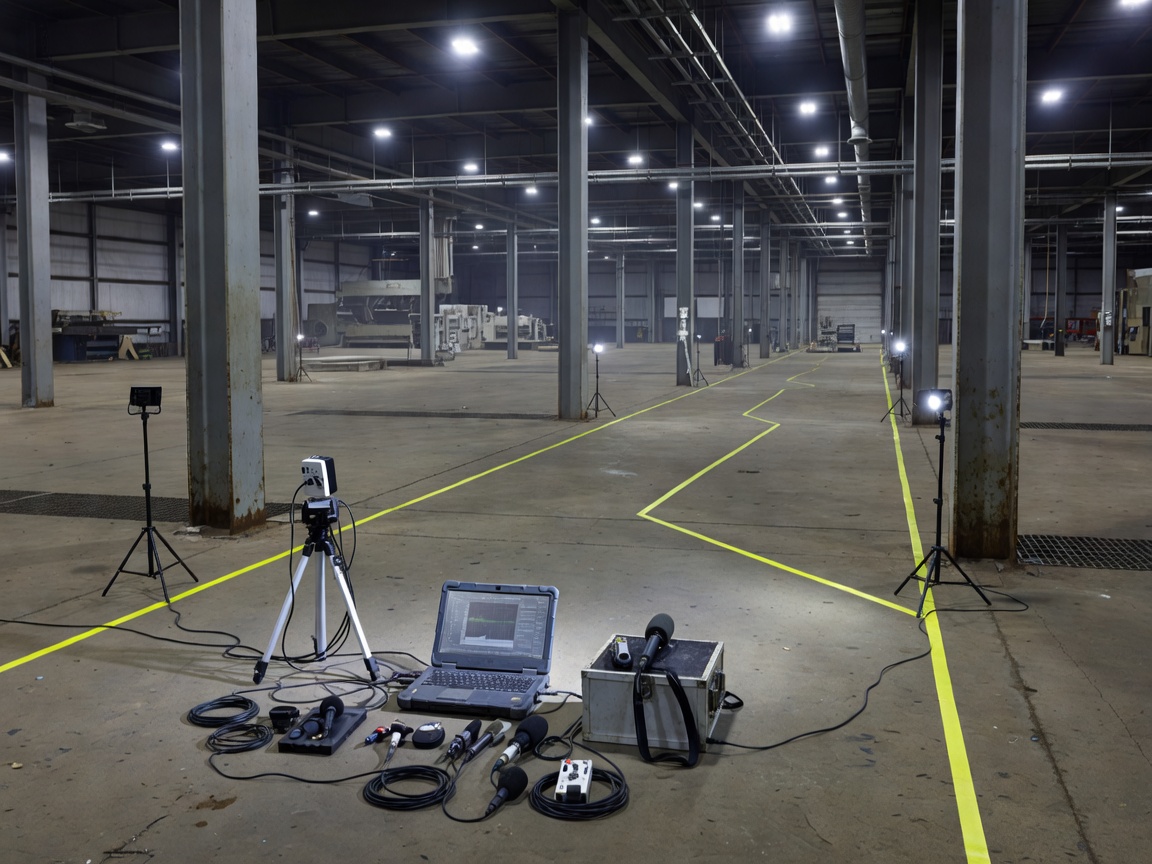
Industrial noise assessment is less about collecting one impressive number and more about understanding a working environment over time. A production floor changes as lines start, stop, warm up, load, unload and hand over to the next shift. A workshop can sound entirely different when a roller door is open or when one rarely used tool comes into play. The useful assessment captures those patterns rather than pretending the building is a still photograph.
Begin with the sources
Start by listing the equipment and activities that may contribute to the problem. Motors, presses, compressors, extraction systems, conveyors, impact tools and material handling can each create a different acoustic signature. Some sources are broadband and energetic; others are tonal, intermittent or impulsive. That distinction matters because a soft absorbing surface may help with reflected sound while doing little to contain a direct, powerful source.
Walk the facility with operators and maintenance staff. They often know which machine changes the character of a room, which door rattles, and where conversation becomes difficult. Record operating states, not just equipment names. “Compressor running under load beside the open bay” is a far more useful observation than “compressor.”
Read the production area as a system
Once sources are identified, look at the production area around them. Hard concrete, metal cladding, glazing and exposed services can return sound repeatedly, increasing reverberation and making a source seem present in places it is not. High roofs and open mezzanines create long paths. Corridors, stairwells and service openings can carry sound into offices or welfare areas.
Noise mapping helps turn this into a shared picture. A simple plan can show source locations, operator stations, routes, doors and areas where people report difficulty. Measurements can then be associated with time, task and location. The map is not decoration; it helps distinguish a local issue from a room-wide acoustic condition.
Plan measurements carefully
Measurement planning should reflect how the facility is used. Consider representative operating conditions, shift patterns, weather where external openings matter, and the position of people who need protection or communication. Measurements near a source answer a different question from measurements at a supervisor’s desk or beside a pedestrian route.
Keep a field record with dates, equipment states, access limitations and unusual events. If a reading is affected by a forklift passing or a door being opened, note it. Repeatable documentation is more valuable than false precision. Where exact conclusions require specialist instrumentation or statutory assessment, use an appropriately qualified acoustic professional; this guide is a planning aid, not a substitute for regulated measurement.
Look for reverberation and pathways
Reverberation is the persistence of sound after the source changes. In a reflective factory, it can raise the general acoustic energy and blur speech without a single wall being “the” culprit. Clapping is not a measurement, but a careful listening walk can reveal tails, flutter between parallel surfaces and abrupt changes at doors or partitions. Those observations help decide whether the priority is absorption, source containment, layout or a combination.
Document the problem area
A useful assessment pack usually includes a marked plan, source register, operating notes, photographs of relevant construction, access constraints and a prioritised list of observations. Include the things that could limit a future solution: ventilation, cleaning, fire routes, lifting paths, sightlines and maintenance clearances. A panel that blocks a service hatch is not a successful panel, however serene it looks in a brochure.
What comes next
Assessment should end with decisions, not a drawer full of readings. Separate urgent source issues from room-wide reverberation, then consider what can be changed at source, along the path or at the receiver. That structure makes quotations easier to compare and phased work easier to explain. If you are ready to turn observations into a practical brief, we can help you frame the next step.